
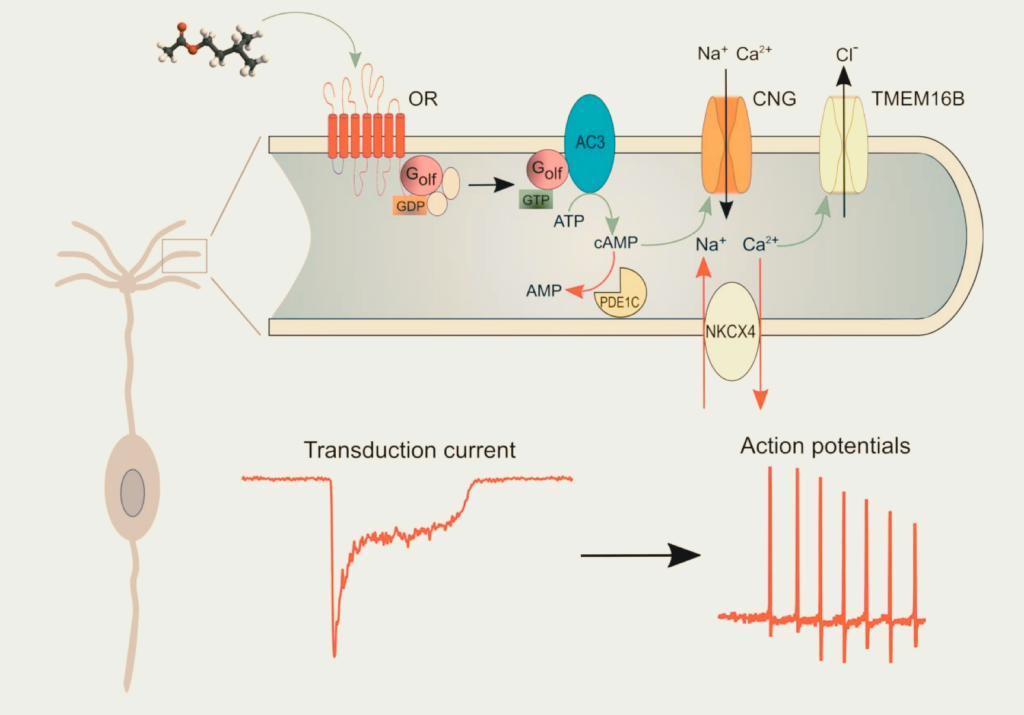
Olfactory Transduction Mechanism
We have been dedicated to elucidating the key proteins involved in the mechanisms of olfaction, particularly focusing on how these proteins contribute to the speed and adaptability of olfactory responses. Our research has been instrumental in deepening our comprehension of the operational integrity of the olfactory system.
Olfaction in Health and Disease
In our research, we focus on the olfactory epithelium, a critical yet often overlooked tissue responsible for our sense of smell. Our work delves into the intricate cellular mechanisms that govern olfactory function and their role in maintaining overall health. Furthermore, we have explored the pathophysiological changes that occur in the olfactory epithelium in various disease states, such as neurodegenerative disorders, in particular Alzheimer’s and Niemann Pick Type C1 disease.
For more info, click here
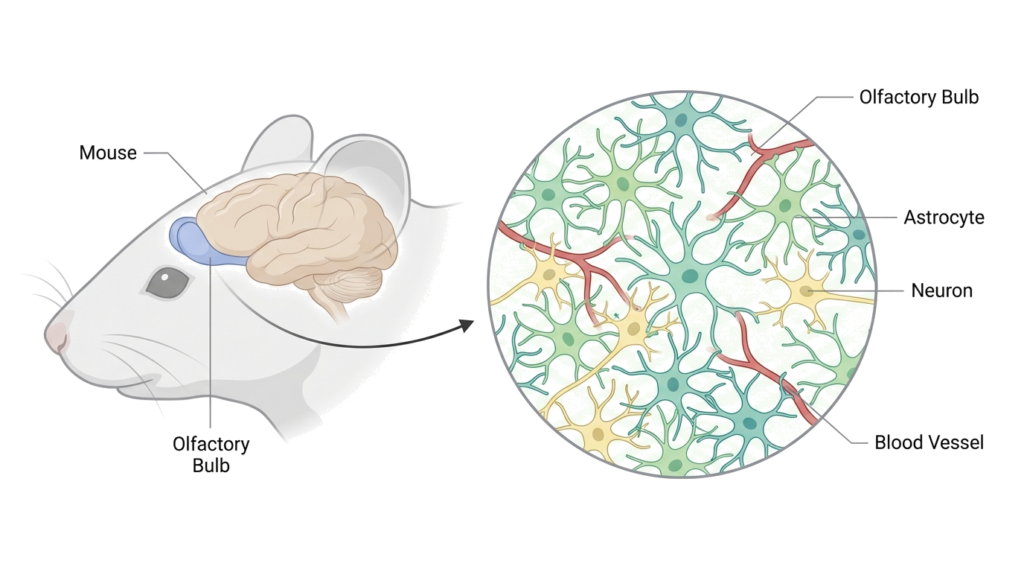
Structural and Functional Plasticity of Astrocytes in the Olfactory System
Olfaction remains one of the most ancient and least understood sensory systems. This project aims to unravel the cellular and molecular mechanisms involved in hedonic value coding of odors in the olfactory bulb (OB). Specifically, the work focuses on the role of the astrocytes and dopaminergic cells in modulating neuronal activity under olfactory stimulation. Astrocytes, through their structural plasticity and calcium dynamics, influence the glomerular circuitry, potentially affecting the perception of odor valence.
Read More
In parallel, dopaminergic neurons are hypothesized to modulate both basal and evoked OB activity in a hedonic tone-dependent manner, especially through interactions with astrocytic signaling.
We aim of:
- Investigating calcium dynamics and glutamate signaling in astrocytes during odor stimulation with varying hedonic values
- Analyzing dopamine dynamics in the OB using fiber photometry in behaving mice exposed to pleasant and unpleasant odors
- Decoding posture-related behavioral actions called “syllables” associated with odor valence, using DeepLabCut and MoSeq analysis
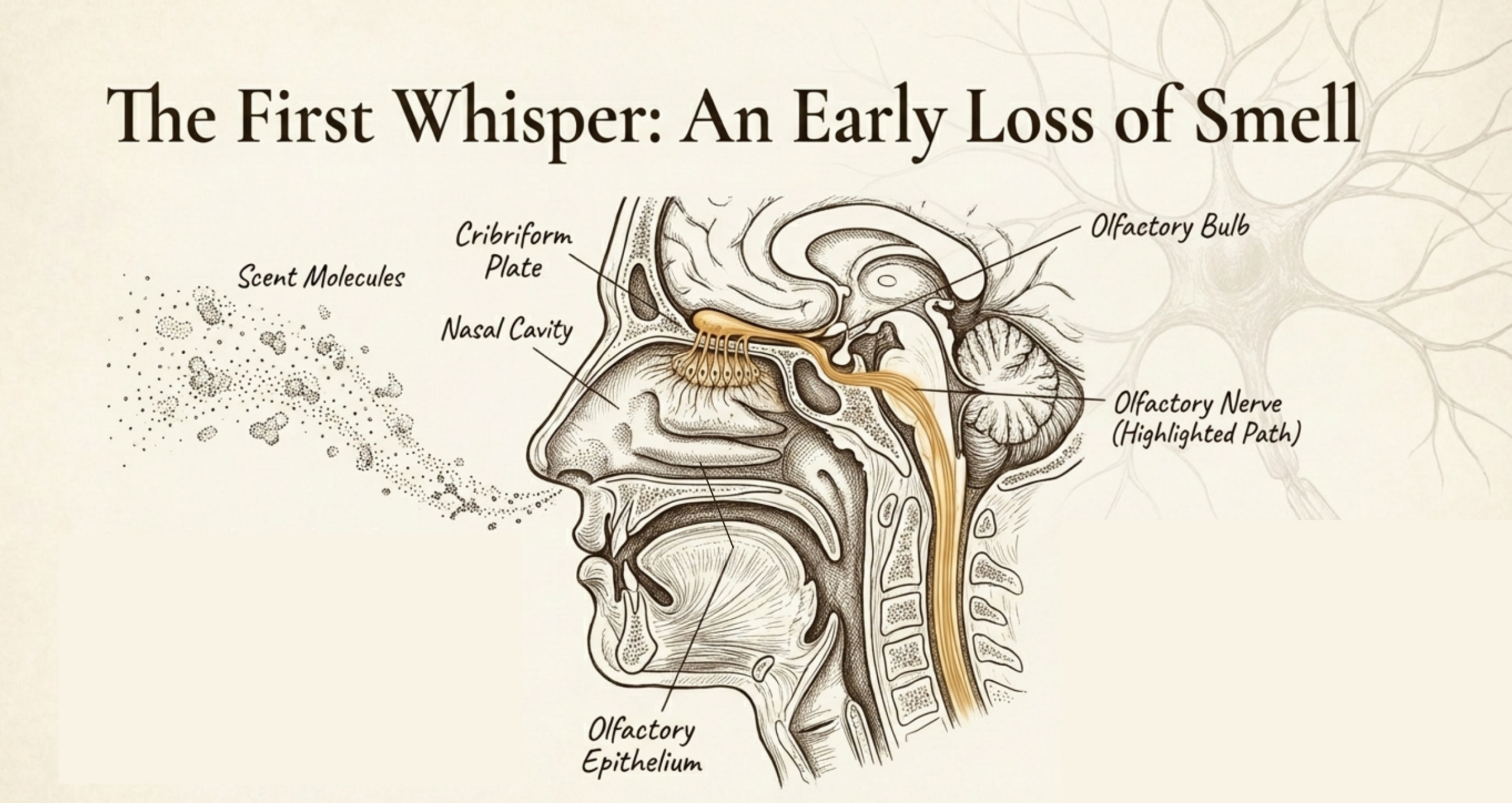
Odor Coding and Transduction in
Human Olfactory Sensory Neurons
Human odor perception starts when odorant molecules enter the nasal cavity and reach the olfactory epithelium.
This specialized tissue contains million of Olfactory Sensory Neurons (OSNs); the primary cells that detect odors. Our work focuses on understanding the fundamental processes that occur within these specific human neurons.
Read More
Three core questions to unlock human olfaction.
Our research is structured around a journey to answer three sequential questions about human OSNs:
- Revealing human OSN odorant recognition strategy
- Demonstrating that human OSN respond to ethologically relevant odorants
- De-orphanization of narrowly tuned human ORs
By tackling these questions, we will build the first comprehensive physiological map of the periphery of human olfaction.
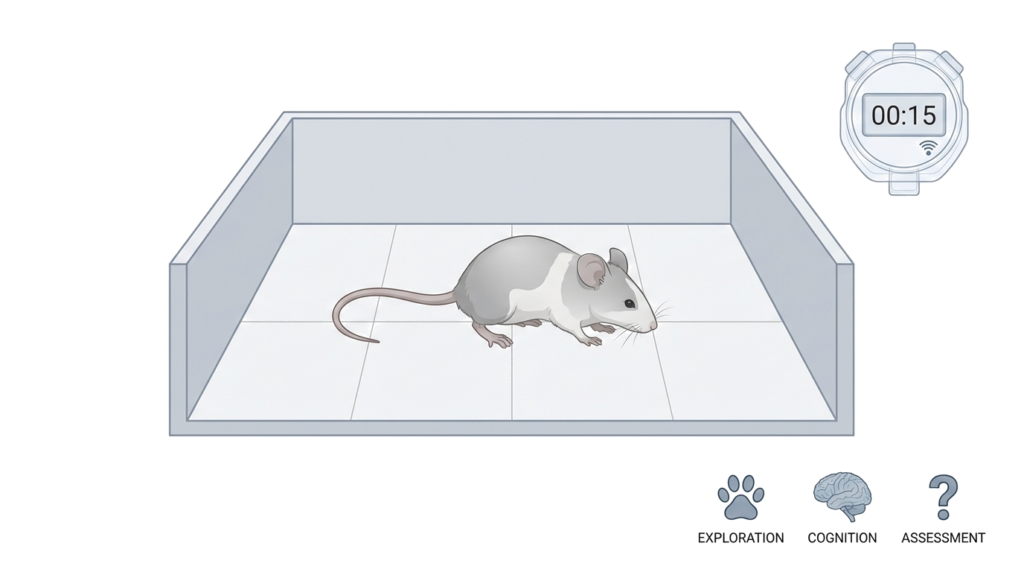
Exploring Olfactory Behavior
Odorant preference plays a crucial role in guiding behaviors such as approach or avoidance in humans and many other vertebrates, which is crucial for survival and social interactions.
However, the behavior driven by olfactory stimuli is still not fully understood.
Hence, we are investigating the factors driving beahvioral responses to olfactory stimuli in order to generate a model to predict the actions governing olfactory behavior.
Read More
Since behavior can be broken down into sequences of posture transitions controlled by neuronal activity,
we are analyzing olfactory preference by identifying odors that elicit approach or avoidance behaviors in mice.
Using Keypoint MoSeq, an unsupervised machine learning tool for tracking fine motor behaviors, we are analyzing the movements and posture patterns of mice, which we are using to train our model. Moreover, we are exposing the mice to varying odorants to comprehend how olfactory stimuli affect behavior.